Exterior highlights that set the tone
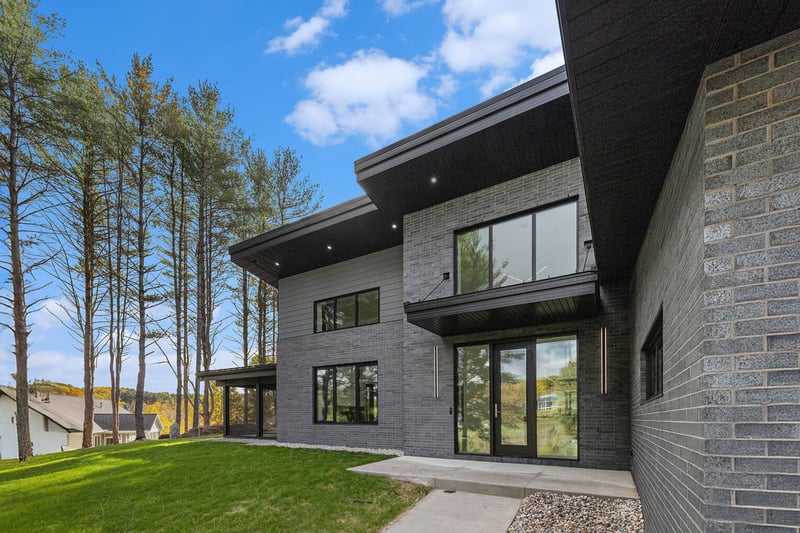
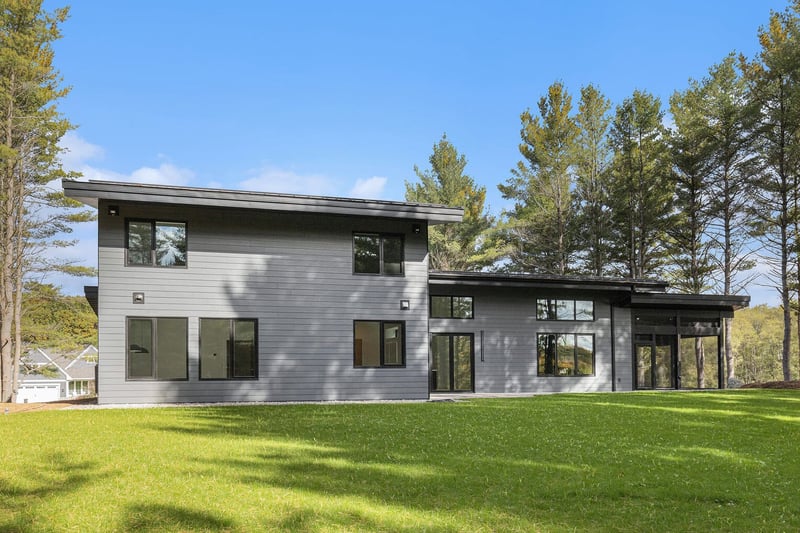
Flat rooflines extend outward with generous overhangs, creating strong horizontal lines that visually anchor the structure to the site. Large window openings punctuate the façade, bringing daylight deep into the interior spaces while maintaining the crisp geometry of the architecture.
The exterior material palette reinforces this modern aesthetic. Materials include:
- Ebonite Velour brick, adding depth and texture to the façade
- James Hardie 7-inch lap siding for clean horizontal rhythm
- Standing seam metal roofing, emphasizing long lines and durability
- Black-framed fiberglass windows that sharpen the visual contrast and frame views of the surrounding landscape
Designed to Frame the Landscape
One of the most striking aspects of the home is how intentionally it interacts with its surroundings.
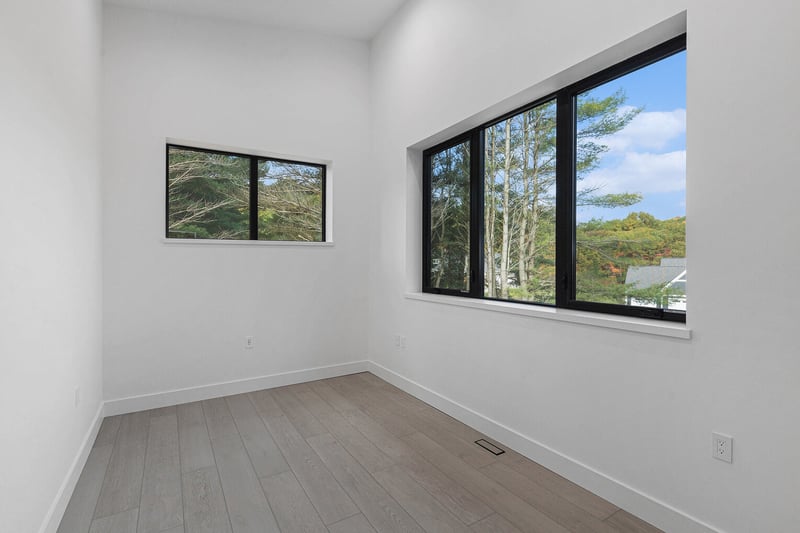
Tall windows frame views of the wooded landscape while bringing natural light into the central living spaces. Inside, those windows become living artwork, changing with the seasons as the surrounding trees shift from vibrant greens to autumn gold.
Adjusting the Design to Fit the Terrain
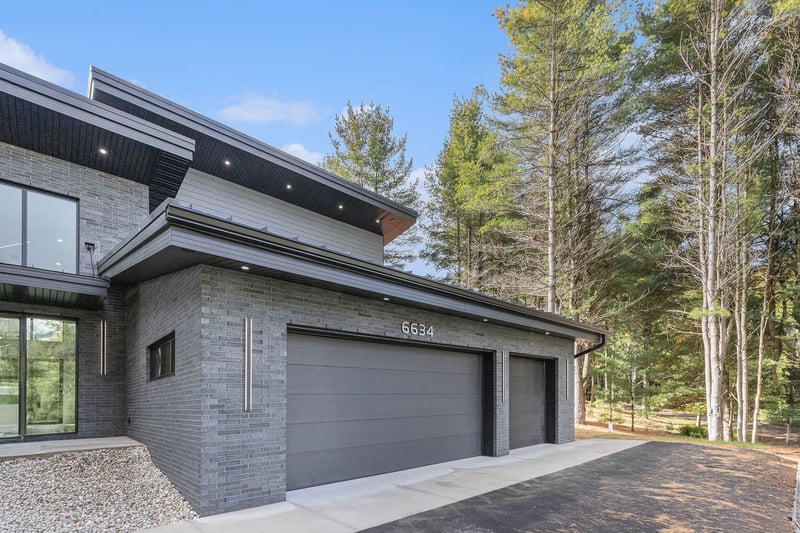
During early site evaluation, one important discovery emerged: the garage elevation needed to be adjusted relative to the rest of the house due to the slope of the property.
This led to a series of refinements, including:
- Adjusting the garage height
- Revising window placements in the rooms above
- Modifying the entry transition between the garage and the main home
These adjustments ensured the house would sit naturally on the property while maintaining the architectural proportions of the design. It’s a good example of how early pre-construction planning allows a home to truly fit its site rather than fighting against it.
View our custom home portfolio for more examples of our design expertise applied.
Interior Architecture: Volume, Light, and Calm
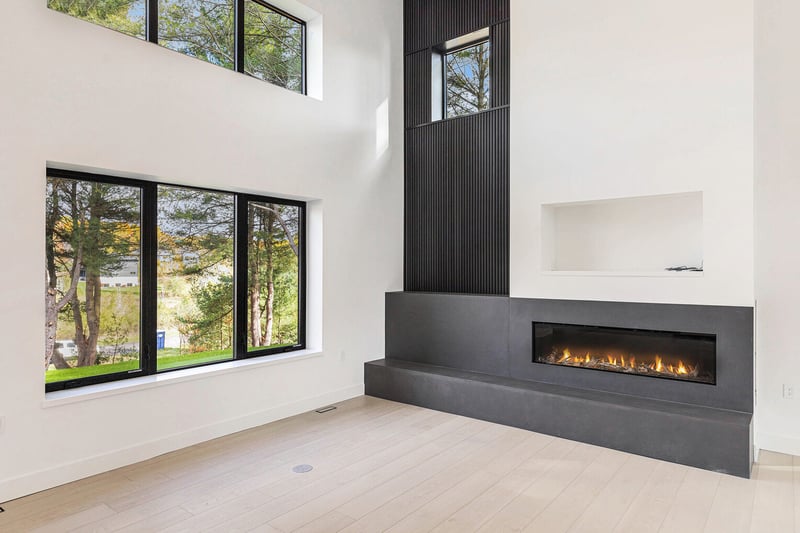
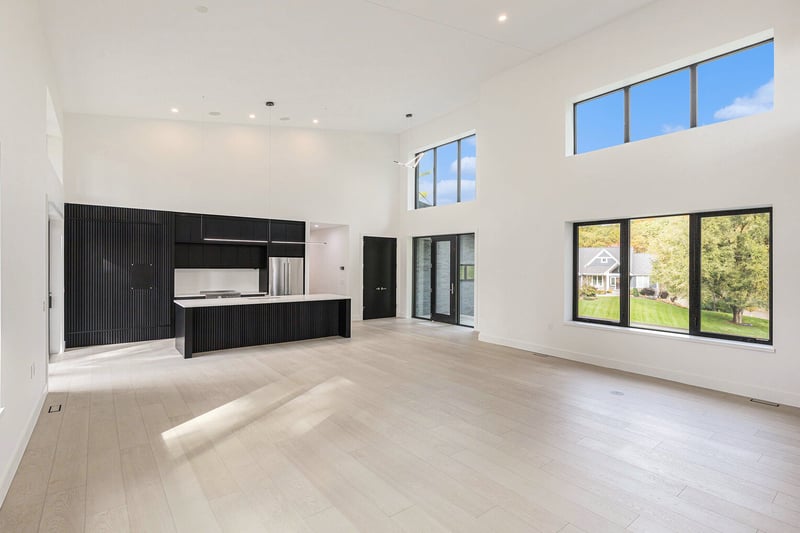
The main living space rises dramatically with tall ceilings that allow daylight to flow freely throughout the room. Large black-framed windows stretch outward toward the landscape, bringing the surrounding trees into view and reinforcing the connection between the home and its natural setting. The interior palette is intentionally restrained. Soft-toned wide plank flooring, crisp white walls, and carefully selected materials create a calm backdrop that allows natural light to take center stage.
The Fireplace Feature Wall
The fireplace wall is defined by a striking Akupanel slat wall, which extends vertically to emphasize the height of the room. The dark slatted surface adds depth and rhythm to the otherwise minimalist interior.
At the base, a long linear Dimplex Opti-Mist fireplace sits within a sculptural concrete hearth, creating a clean horizontal element that balances the vertical slat feature above.
Additional details include:
- A recessed display niche
- Integrated seating along the hearth
- Simple geometric lines that complement the home’s modern aesthetic
Kitchen Design: Minimalism With Purpose
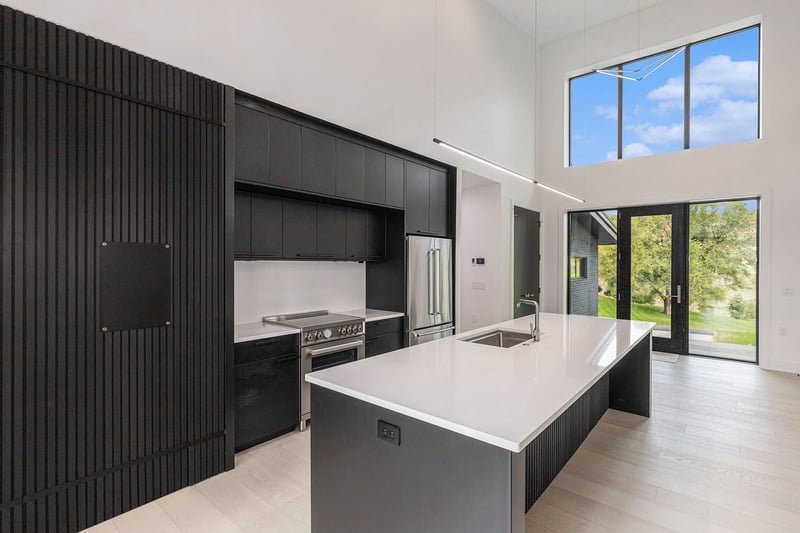
In many homes, the kitchen becomes the visual and social center of the house. At Knockadoon Hill, that role is embraced, but expressed with restraint and precision.
A large central island anchors the room, topped with Vicostone quartz countertops that provide both durability and a bright visual contrast to the darker cabinetry.
Black cabinetry with accents of the vertical slat wall introduces subtle texture while maintaining the modern aesthetic established in the living room’s feature wall. Many of the cabinets are integrated or concealed, allowing appliances and storage to disappear into the architecture rather than dominate it.
Overhead, slim linear pendant lighting reinforces the geometry of the room without interrupting the clean visual flow.
Spa-Inspired Primary Bathroom
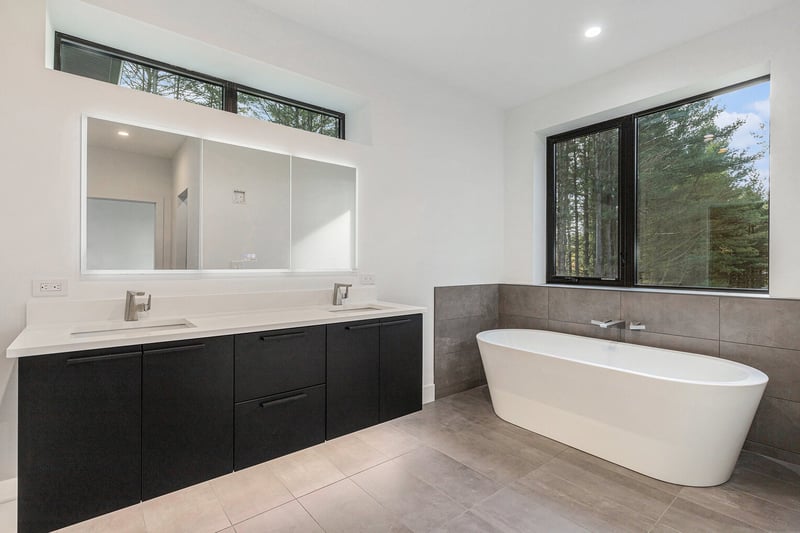
At the center of the primary bathroom sits a Kohler soaking tub, positioned to take advantage of natural light and views of the trees beyond the window.
A floating black vanity keeps the room feeling open while reinforcing the modern design language used throughout the house. Minimal fixtures and carefully selected finishes maintain a calm visual palette that allows light and space to define the room.
The walk-in shower continues the same philosophy of simplicity and functionality. A frameless glass enclosure keeps sightlines open while integrated bench seating and subtle tile textures add comfort without unnecessary complexity.
Outdoor Living: The Screened Porch
While the interior of the home emphasizes light and openness, the screened porch extends that experience outdoors.
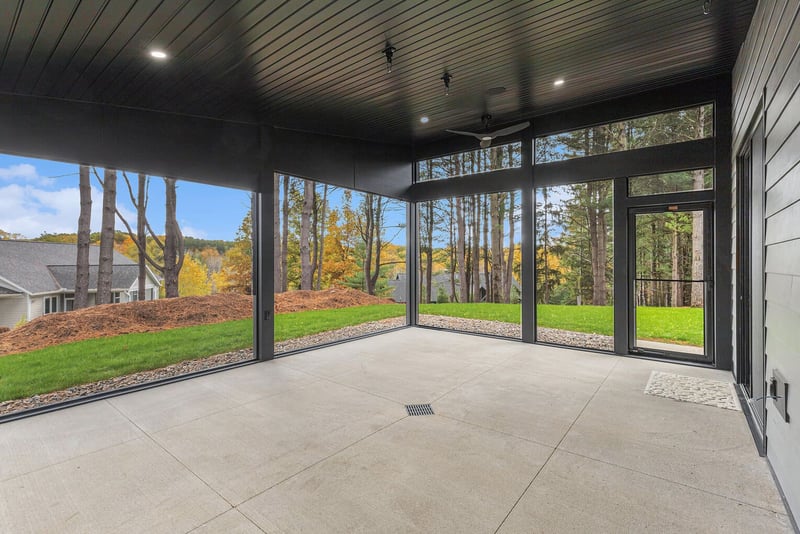
Positioned along the rear of the home, the porch acts as a transitional space between the interior living areas and the wooded landscape beyond. Large, screened openings allow fresh air and views of the surrounding trees while protecting the space from insects and weather.
The tall ceiling continues the generous proportions established inside the house, creating an outdoor room that feels just as comfortable and intentional as the spaces within.
Concrete flooring provides durability and low maintenance, making the porch an ideal place for morning coffee, summer dinners, or quiet evenings watching the light fade through the trees.
Building for Performance: Structure and Envelope
Many homes focus primarily on appearance. R-Value Homes starts with the structure and performance of the home itself, because those decisions determine comfort, durability, and long-term energy use.
Nudura ICF Walls
The structural backbone of the home is built with Nudura Insulated Concrete Forms (ICF).
ICF walls combine reinforced concrete with continuous insulation, creating a structure that is dramatically stronger and more airtight than conventional framing.
Benefits include:
- Superior insulation levels
- Extremely low air leakage
- Exceptional durability and storm resilience
- Outstanding sound control
The concrete core also provides thermal mass, helping stabilize indoor temperatures and reducing temperature swings throughout the day. For homeowners, this translates to a home that feels quieter, more comfortable, and easier to heat and cool year-round.
Triple-Pane Fiberglass Windows
Large windows are essential to the home’s modern design, but large glass areas can also be one of the biggest energy losses in a house. To solve this, the Knockadoon Hill project uses Duxton fiberglass triple-pane windows.
These windows were selected for several reasons:
- Fiberglass frames are stronger than vinyl, allowing larger glass units
- Fiberglass expands and contracts at nearly the same rate as glass, adding durability
- Triple-pane glazing dramatically reduces heat loss
- Improved spacers help reduce condensation in airtight homes
Because this home is tightly sealed and well insulated, maintaining comfortable indoor humidity levels is easier. Triple-pane windows ensure that higher humidity won’t lead to condensation on cold winter days.
Mechanical Systems: Comfort and Healthy Air
All-Electric Heating and Cooling
The home is powered by a Bryant heat pump system, which provides both heating and cooling.
Heat pumps are especially well suited for high-performance homes because they deliver efficient temperature control without combustion inside the house.
Key benefits include:
- High energy efficiency
- No combustion appliances inside the home
- Reduced risk of carbon monoxide
- Compatibility with future solar power systems
Heat pumps today perform well even in cold climates like Michigan. For extremely cold conditions, the system includes backup resistance heating, though in this region it is rarely needed.
Smart Ventilation With an Energy Recovery Ventilator
Airtight homes require carefully designed ventilation systems to maintain healthy indoor air.
This home uses a Broan AI Series Energy Recovery Ventilator (ERV) to manage fresh air.
The ERV continuously monitors indoor conditions, including humidity and carbon dioxide, and adjusts ventilation automatically.
Fresh air is delivered to living spaces while stale air is removed from areas like bathrooms. At the same time, the ERV recovers heat from the outgoing air, preventing unnecessary energy loss.
Certifications and Energy Performance
The building systems used in the Knockadoon Hill home are verified through independent performance certifications.
- DOE Zero Energy Ready Home
- ENERGY STAR Certified
- Indoor airPLUS Certified
What These Certifications Mean for Homeowners
For the homeowners, these certifications translate into tangible benefits:
- Dramatically lower energy consumption
- Better indoor air quality
- Improved moisture control
- More consistent indoor temperatures
- Greatly reduced opportunity for mold growth
Homes built to these standards are also designed to be solar-ready, meaning future photovoltaic systems can offset most, or even all, of the home’s energy consumption.
Craftsmanship and Problem Solving During Construction
Every custom home includes moments where careful craftsmanship and problem solving make the difference between a good outcome and a great one. The Knockadoon Hill project was no exception.
Because this home involved unique design elements, advanced building systems, and a challenging site, the construction process required a number of thoughtful adjustments along the way.
Winter Concrete Logistics
One of the first challenges appeared during the concrete work. The driveway leading to the site had a steep slope, and during the winter it became completely iced over. Concrete pump trucks and ready-mix trucks simply couldn’t reach the house safely.
Construction paused briefly while conditions improved. On the day of the pour, the team arrived hours early to treat the driveway and ensure trucks could reach the site safely. Situations like this are part of building custom homes in Michigan’s climate, where weather can become a logistical factor overnight.
Refining the Floor System
Another unexpected issue appeared in the concrete slab. Because the slab was poured over a layer of sand rather than directly over rigid insulation, the concrete cured unpredictably and developed slight curling at the control joints.
The solution required grinding high spots and filling low areas to restore a perfectly flat surface before flooring could be installed. While time-consuming, this correction ensured the finished floors would perform and look exactly as intended.
Getting the Details Right
Custom homes often involve products and systems that are not installed in typical production housing, which sometimes leads to unexpected adjustments. For example, the soaking tub selected for the primary bathroom included an air bubbling system located in a nearby cabinet. When the tub arrived, the manufacturer had changed the electrical connection location from the documentation originally provided.
The team had to carefully open the slab, reroute the power connection beneath the floor, and restore the surface before tile installation could proceed. While this added work to the schedule, it ensured the installation met both safety and performance requirements.
Fine-Tuning the Finish Materials
At one point during the interior finishing phase, the originally selected flooring was installed, but the color variation between boards was far greater than expected. After reviewing the installation, the homeowners and builder agreed the look didn’t match the design intent for the home.
The flooring was removed and reordered twice before the right material was found. Situations like this highlight an important truth about custom homes: sometimes achieving the best final result requires patience and a willingness to make adjustments along the way.
Catching the Details That Protect the Home
One final adjustment came during framing. The roof geometry at one corner of the home would have pointed water directly toward the intersection of two roof planes. Left unchanged, this could have created drainage issues over time.
The solution was simple but important, a small roof cricket was added to redirect water away from the corner and ensure long-term durability. These kinds of adjustments may never be noticed by visitors, but they are essential to building a home that will perform well for decades.
Timeline and Investment
The homeowners first began exploring the project in early 2023, working through design concepts, site planning, and product selections to ensure the home would perform exactly as intended. Construction officially began in November of 2024, with the home reaching completion in November of 2025.
From initial conversations to final move-in, the project reflects the kind of timeline typical for a thoughtfully designed high-performance custom home, where planning, engineering, and craftsmanship all play important roles in the final result.
The finished home reflects an investment consistent with many high-performance custom homes of this scope, with pricing shaped by design complexity, materials, detailing, and certification goals.
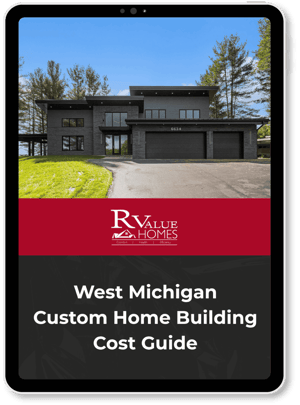
Curious what homes like this typically cost in West Michigan? Access our Custom Home Cost Guide to see real project ranges and what drives pricing.
Build a High-Performance Custom Home in West Michigan
If the Knockadoon Hill project resonates with you, it might be time to explore what building your own high-performance home could look like. R-Value Homes designs and builds custom homes throughout West Michigan, combining modern architecture with advanced building science to create homes that are comfortable, durable, and energy-efficient for generations.
Reach out today to connect about your sustainable and efficient custom West Michigan home.