8 Min Read
.jpg?width=960&height=540&name=How%20to%20Set%20a%20Realistic%20Budget%20for%20a%20Custom%20Home%20in%20West%20Michigan%20(1).jpg)
The amount a bank is willing to lend you should not automatically become your custom home budget.
So how do you decide what the budget should be? Big picture:
1) Distinguish between what you can borrow from what you are actually comfortable investing,
2) Create budgets for the full project scope: not just the construction cost
In this post, we explain how to set a realistic custom home budget in West Michigan, what to include, how to pressure-test the numbers, and how a clear design-build process can help you make better decisions before construction begins.
Table of Contents
- How Do You Set a Realistic Custom Home Budget?
- Your Total Investment Is More Than the Construction Contract
- What Costs Do Custom Home Buyers Commonly Miss?
- Why Cost Per Square Foot Is Only a Starting Point for a Custom Home in Michigan
- Why Should You Set the Budget Before Designing a Custom Home?
- How Do You Pressure-Test a Custom Home Budget in West Michigan?
- What Should You Change When the Budget Does Not Work?
- How R-Value’s Design-Build Process Brings the Budget Into Focus
- Frequently Asked Questions About Custom Home Budget Planning
- Build a Custom Home Budget With More Confidence
How Do You Set a Realistic Custom Home Budget?
A realistic custom home budget is the amount you can invest while still protecting your monthly cash flow, savings goals, future plans, and financial flexibility.
When buyers ask, “How much can I afford to build?” the better question is, “What total investment can I carry comfortably without compromising other priorities?”
At R-Value Homes, we recommend identifying an ideal target, an acceptable upper range, and an absolute ceiling. Those three numbers give you a range you can actually use.
There is a big difference between mortgage approval and affordability. A preapproval is based on lending criteria. Your personal budget should also account for:
- Retirement goals
- Future income changes
- Travel and lifestyle priorities
- Emergency savings
- Ongoing maintenance
- Furnishing and landscaping
- The amount of cash you want to keep after the project
Ask your lender to show you several scenarios, not just the maximum approval. The bank is not responsible for protecting your retirement, your flexibility, or your peace of mind. You are.
Still working through what type of project fits your goals and budget? Our Start Here quiz can help you think through your priorities before you move deeper into planning.
Your Total Investment Is More Than the Construction Contract
Your construction budget is only one part of the total investment.
This is one of the most common points of confusion early in the process. A buyer may say, “Our budget is $1 million,” while assuming that nearly all of it can go toward the house itself.
Usually, it cannot.
The land, design work, furnishings, landscaping, and financing costs may all need to come from that same total.
|
Budget Category |
Typical Planning Range |
What It May Include |
|
Property |
10%–15% |
Land, surveys, due diligence, utilities, clearing, driveway, and site preparation |
|
Design |
3%–5% |
Home design, site planning, engineering, specifications, estimating, and consultants |
|
Construction |
70%–80% |
Labor, materials, systems, finishes, permits, inspections, and builder management |
|
Furnishings and Landscaping |
3%–10% |
Furniture, window treatments, lawn, plantings, patios, retaining walls, and decorating |
Learning how to budget for a custom home starts with separating the total investment into these four categories.
Property
The property budget is not just the purchase price of the land.
A less expensive lot is not always a less expensive place to build. Steep grades, difficult soils, long utility runs, drainage concerns, access requirements, or an unusual septic system can add costs.
In West Michigan, lake-area restrictions, utility access, and septic requirements can all reduce the amount available for the house itself.
We recommend getting a builder involved early, ideally before you purchase the property, so potential site costs can be identified before they become budget surprises.
Design
Design is where we find out if the home you want can actually be built on the lot and within the budget.
Good design is more than drawing a floor plan. It may also include site planning, engineering, specifications, estimating, and input from interior or mechanical design professionals.
Design is also commonly a cash expense. Ask early in your custom home budget planning which costs can be financed and which may need to be paid out of pocket.
Construction
Construction is usually the largest portion of the investment, but it should not be treated as the entire budget.
In the current market, it is very difficult to build a fully custom home for less than $500,000.
Lower budget options include: semi- custom or production builders, modular homes, or small renovations to existing homes.
Furnishings and Landscaping
Buyers often underestimate this category because most of the bills show up near the end.
While some items can be delayed, others need to be discussed early because they affect drainage, access, utilities, or the site plan.
Landscaping may be the last thing on your mind, but retaining walls and grading problems are not good surprises at the end of a project.
Even after dividing the investment into these four categories, some costs are easy to underestimate or leave out entirely.
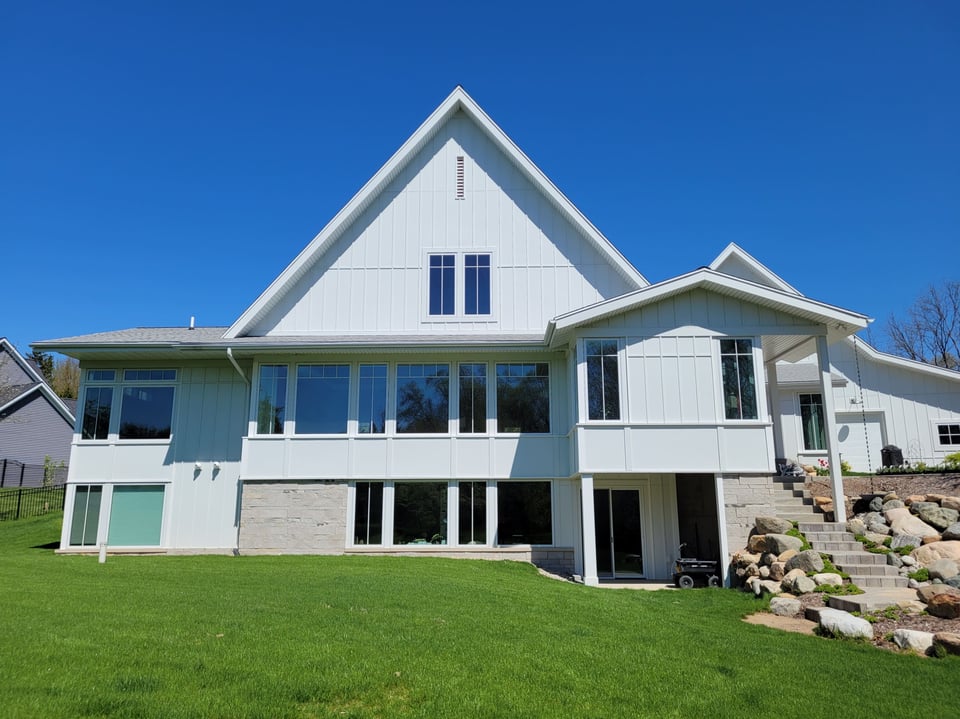
What Costs Do Custom Home Buyers Commonly Miss?
The hidden costs of building a custom home are often not truly hidden. They are simply outside the number the buyer has been focused on.
Commonly missed costs tend to fall into four groups:
- Site Costs: Conditions or work not included in the land price, such as clearing, utility extensions, unusual soils, septic systems, driveways, and retaining walls
- Financial Costs: Financing fees, builder’s risk insurance, electric and/or gas used throughout construction, and contingency fund
- Completion Costs: Landscaping, furnishings, window treatments, and moving
- Owner Changes: Upgrades or scope changes made after pricing
Your budget needs to cover what you know and leave room for what you do not know yet.
Contingency in a Fixed-Price Build
If you are working with a builder who uses a fixed-price construction agreement, such as R-Value Homes, contingency funds are not required, since your construction costs are firm.
Instead, contingency is reserved for major events that are outside anyone’s reasonable control, such as:
- Pandemics
- Tariffs
- Wars
- Other major disruptions that significantly affect pricing or material availability
Owner-requested changes are different. If you decide to add a feature, upgrade a finish, or change the scope after pricing is complete, that is a change order, not a contingency.
The point of a fixed-price process is to resolve as many decisions and costs as possible before construction begins, so contingency is reserved for truly extraordinary circumstances.
Why Cost Per Square Foot Is Only a Starting Point for a Custom Home in Michigan
Cost per square foot calculators can help determine if a project is in the right general range, but they are not detailed enough to establish a reliable custom home budget.
Two homes with the same square footage can have very different costs.
A home with a simple footprint, modest window package, unfinished basement, and straightforward site will not cost the same as a home with extensive glass, complex rooflines, high-end cabinetry, engineered HVAC, retaining walls, and a finished lower level.
A smaller home is not always proportionally cheaper, either. Kitchens, bathrooms, mechanical systems, and site costs do not shrink at the same rate as overall square footage.
Cost per square foot is a checkpoint, not a budget.
For a deeper explanation, read Can I Price My Custom Home by the Square Foot?
Why Should You Set the Budget Before Designing a Custom Home?
The farther the plans go before the budget is tested, the more expensive it is to fix the mismatch.
Plans should not be allowed to outrun the budget.
Beyond square footage, major budget factors include:
- Complex rooflines
- Large window packages
- Extensive site work
- Finished basements
- Custom cabinetry
- Specialty finishes
- Detached structures or major outdoor living areas
If the construction portion of the budget does not match the home you want, it is better to find that out before paying for detailed drawings.
At R-Value, design and pricing develop together. The design-build process moves from priorities and concept drawings into pricing, specifications, selections, final drawings, and final pricing before construction begins.
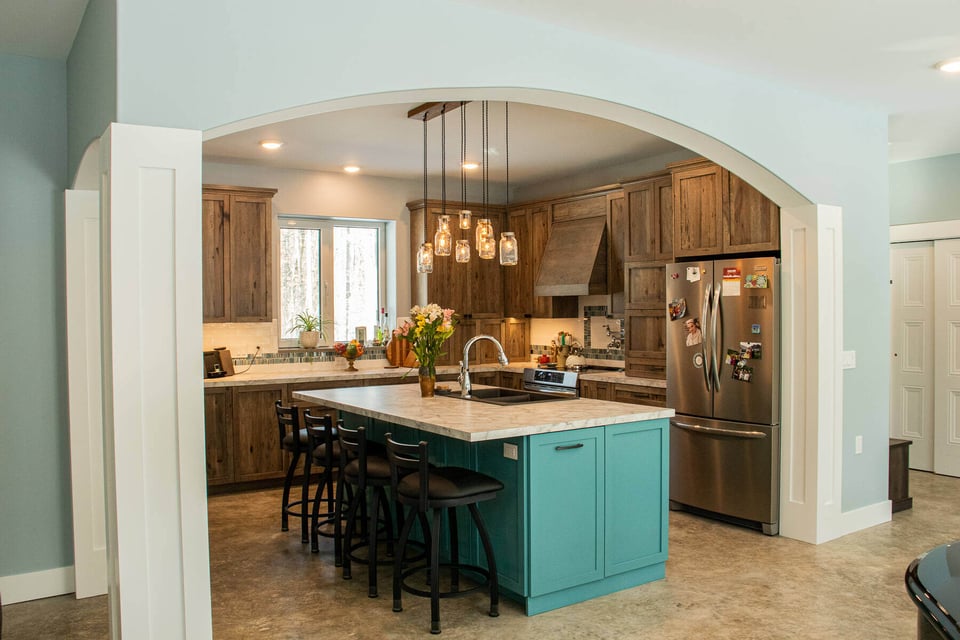
How Do You Pressure-Test a Custom Home Budget in West Michigan?
Pressure-test the budget against real homes, current costs, the lot, and a builder who knows what these projects take.
1. Review the Custom Home Pricing Guide
The cost to build a custom home in Michigan varies widely. Use the Custom Home Pricing Guide to compare your expectations with current planning information and the type of home you are considering.
Pay attention to the relationship between home size, design complexity, performance goals, finish level, and site conditions.
It can help you see if your budget is in the right ballpark.
2. Visit the Parade of Homes With a Budget Lens
Walk through homes similar in size and quality to what you are considering, then ask how much they cost to build.
Also, ask if the number includes:
- Land
- Landscaping
- Furnishings
- Finished basement space
- Unusual site costs
Then compare like with like. If the quoted price includes items outside the construction contract, separate those costs before comparing it with the construction portion of your own budget.
You can also review our custom home gallery to compare the scale, design, and performance features of completed West Michigan homes with what you are considering.
3. Have an Early Planning Conversation
A builder cannot accurately price a home that has not been designed, but an early conversation can still expose obvious mismatches before they become expensive.
Be ready to discuss the lot, approximate size, garage, basement, performance goals, must-have spaces, finish expectations, and timeline.
What Should You Change When the Budget Does Not Work?
When the early numbers do not align, the first response should not be panic. It should be prioritization.
Possible adjustments include:
- Reducing conditioned square footage
- Simplifying the footprint and roofline
- Leaving some areas unfinished
- Phasing outdoor living, landscaping, or detached structures
- Adjusting finish levels
- Reconsidering the property
In many cases, simplifying the home saves more than shopping for cheaper finishes.
The goal is not to remove everything enjoyable. Spend first on the parts of the home that matter most to how you will live in it.
A clear priority list helps.
We recommend beginning with a MoSCoW report:
- Must have
- Should have
- Could have
- Will not have
This tells the design team what must stay and what can move if the numbers do not work.

How R-Value’s Design-Build Process Brings the Budget Into Focus
A design-build process should make the budget more reliable as the home becomes more defined.
R-Value Homes does not treat design and pricing as separate exercises. The lot, layout, systems, specifications, selections, and budget are developed together so problems can be identified before construction begins.
You move through a clear sequence:
- Priorities and budget targets
- Site review and early design
- Pricing checkpoints
- Specifications and selections
- Plan review and coordination
- Value engineering
- Final pricing before construction
The purpose is to replace assumptions with better information at each step.
That gives you clear deliverables, clear expectations, and more confidence in the final construction price.
Frequently Asked Questions About Custom Home Budget Planning
Is my preapproval amount the same as my custom home budget?
No. Your preapproval amount shows what a lender may be willing to finance, while your home budget should reflect what you can comfortably invest.
When comparing a preapproval amount vs. a custom home budget, consider monthly cash flow, savings, retirement goals, future plans, and the amount of cash you want to keep after the project is complete.
What should a custom home budget include?
A custom home budget should include more than the construction contract.
It should account for:
- Property
- Design
- Construction
- Furnishings and landscaping
- Financing costs
- Contingency funds
The exact balance will vary by project, but these categories help prevent important costs from being left out.
When should I contact a custom home builder?
Contact a builder early, ideally before purchasing land or finalizing plans.
A builder can help you evaluate the lot, identify likely site costs, review your goals, and determine whether the budget and project direction are broadly aligned. Early input is usually more valuable than waiting until the plans are complete.
How do I choose the right custom home builder in West Michigan?
Choose a builder whose process, communication style, and experience match the type of home you want to build.
Look for a builder who can clearly explain:
- How design and pricing work together
- When budget checks happen
- What is included in the specifications
- How site conditions are evaluated
- How changes are handled
- Who will communicate with you throughout the project
Price matters, but so do planning, clarity, and trust. The lowest early number is not always the most reliable one.
Do I need to own land before setting a budget?
No. You can establish an initial budget before buying property, but the land and construction portions should remain flexible until a specific lot has been evaluated.
Land selection, builder selection, and timeline planning can happen at the same time.
What if my budget does not match the home I want?
Start by adjusting the largest cost drivers, not by shopping for the cheapest finishes.
That may mean reducing conditioned square footage, simplifying the footprint or roofline, leaving some spaces unfinished, phasing outdoor features, or reconsidering the property. In many cases, simplifying the design has a greater impact than cutting small finish items.
Build a Custom Home Budget With More Confidence
A realistic custom home budget is a well-planned investment that accounts for the property, design, construction, furnishings, landscaping, and the unknowns that still need to be resolved.
The earlier you define that range, the easier it is to make good decisions about the lot, the design, and the type of home that truly fits.
The R-Value Homes design-build process helps bring those decisions into focus before construction begins. We work through the site, priorities, specifications, pricing checkpoints, selections, and tradeoffs in a clear order so the final construction price is based on detailed information, not assumptions.
When you are ready, an early planning conversation can help identify potential problems before they become expensive to change. Contact us to begin.