
7 Min Read
If you’ve found yourself late at night researching “concrete homes,” there’s a good chance you are not really searching for concrete at all. You may be searching for peace and quiet. For a home that feels solid during a Michigan winter storm. For lower energy bills that still matter 20 years from now. For healthier air, fewer drafts, less maintenance, and the confidence that your home was built intentionally. Most people who end up exploring concrete homes are thinking long term. They care about durability, comfort, stewardship, resilience, and quality of life in a deeper way than the average buyer.R-Value Homes has spent more than 20 years building high-performance homes in West Michigan using insulated concrete forms and other advanced building systems. Long before “healthy homes,” “net-zero,” and “building science” became popular topics online, we were testing these methods in the real world, building them, refining them, and living in them ourselves. Our team specializes in high-performance concrete and ICF construction specifically for the demands of the Michigan climate, with a focus on comfort, durability, efficiency, indoor air quality, and long-term performance.
Table of Contents
- What Is a Concrete Home, Exactly?
- The Four Main Categories of Concrete Homes
- Benefits of Concrete Homes
- A Systematic Approach to Concrete Homes
- Why Many High-Performance Homes in Michigan Use ICF
- FAQs About Concrete Homes
- Concrete & ICF Home Builder in West Michigan
What Is a Concrete Home, Exactly?
Before comparing costs, performance, or construction methods, it helps to clarify the terminology. There is no single “concrete home system." There are several.
And each one has:
- different strengths
- different weaknesses
- different insulation strategies
- different installation methods
- different climate advantages
- and different ideal use cases
Some are optimized for cold climates, speed, prioritize fire resistance, optimizing thermal mass, sustainability, or low-toxicity materials.
The Main Categories of Concrete Homes
In West Michigan, most homeowners researching concrete homes eventually run into some combination of:
| System |
General Description | Common Goals |
|---|---|---|
| ICF (Insulated Concrete Forms) | Reinforced concrete with permanent insulation | Efficiency, comfort, resilience |
| Concrete Block (CMU) | Stacked masonry block walls | Durability, structural strength |
| Cast-in-Place Concrete | Poured concrete with removable forms | Structural performance |
| Tilt-Up Concrete | Large concrete panels lifted into place | Commercial or modern applications |
| Foam-Free ICF | Cementitious insulated systems using mineral-based materials | Natural materials, fire resistance |
But even within those categories, there are major differences. For example, not all ICF systems are installed or insulated the same way. And not every system makes sense for every climate or every builder.
ICF Homes (Insulated Concrete Forms)
Insulated Concrete Forms, commonly called ICF, are one of the most recognizable forms of concrete home construction in cold climates like Michigan. In this system, reinforced concrete is poured between layers of rigid insulation that remain permanently in place after the wall is complete.
ICF homes have become increasingly popular among homeowners focused on:
- energy efficiency
- quieter interiors
- storm resilience
- durability
- and long-term comfort
Many high-performance and net-zero homes use ICF construction because the system naturally lends itself to airtight, well-insulated wall assemblies.
Concrete Block Homes (CMU)
Concrete masonry unit homes, often called CMU or concrete block homes, are built using stacked concrete blocks mortared together to create the wall structure. These systems are extremely common in certain parts of the country, particularly warmer climates where masonry construction has long been standard practice. Concrete block homes are often associated with:
- structural durability
- fire resistance
- pest resistance
- and long service life
However, concrete block construction performs differently than ICF construction, especially when it comes to insulation and thermal performance. This is one reason the terms are often confused online, even though the assemblies function quite differently.
Poured Concrete Homes
Some homes use removable forms to create solid poured concrete walls. Unlike ICF systems, the forms are removed after the concrete cures, and insulation is typically added separately as part of the wall assembly.
These systems are often selected for:
- structural strength
- specialty engineering applications
- unique architectural designs
- or modern-style homes
As with all wall systems, the final performance depends heavily on how the rest of the assembly is designed and detailed.
Tilt-Up Concrete Homes
Tilt-up concrete construction involves large concrete panels that are poured horizontally and then lifted into place with cranes once cured. This method is far more common in commercial and industrial construction, though some modern residential projects use variations of it for a dramatic architectural look.
Tilt-up systems can create visually striking homes, but they are a very different category of construction than the high-performance residential wall systems most people encounter when researching energy-efficient homes in Michigan.
Foam-Free Concrete Systems
There is also growing interest in alternative concrete wall systems such as Faswall and Nexcem. These assemblies use mineral-based materials rather than traditional foam insulation and appeal to some homeowners interested in:
- more natural material assemblies
- reduced foam content
- vapor permeability
- enhanced fire resistance
- or low-toxicity construction approaches
These systems are still relatively niche, but they are another example of how broad the “concrete homes” category has become.
Benefits of Concrete Homes
After more than two decades building high-performance homes in West Michigan, we’ve found that many homeowners struggle to explain exactly what they are looking for at first. They may not know terms like “airtightness,” “thermal bridging,” or “building science.” But they know what discomfort feels like. They know what it’s like to sit near a cold exterior wall in February, hear traffic through the bedroom wall at night, or constantly fight uneven temperatures from room to room.
In many cases, they are also thinking long term. They are planning for retirement, aging in place, resilience during severe weather, or simply building a home they hope will still perform beautifully decades from now. Durability matters to them. So does maintenance, operating cost, and quality of life.
efficiency and Lower Operating Costs
Many homeowners are tired of homes that are expensive to operate forever. They are looking for a house that performs well during a February cold snap, remains stable during summer humidity, and still feels comfortable twenty years from now.
This real-world efficiency is evident in:
- utility bills
- comfort levels
- HVAC performance
- and long-term ownership costs
A Home That Feels Better to Live In
A surprising number of people begin researching concrete homes after years of living in uncomfortable houses. Maybe the upstairs is always too hot. Maybe the floors feel cold all winter. Maybe the furnace never seems to stop running. Many homeowners do not know the technical reasons behind those problems, but they know the experience is frustrating.
A well-designed high-performance home simply feels different. Temperatures are more stable. Drafts are reduced. Rooms feel more consistent. The house feels calmer and more predictable throughout the year.
Quiet
This is one of the most overlooked benefits of high-performance wall systems. People often walk into an ICF home and immediately notice something feels different, even if they cannot explain why. Exterior noise softens. Wind becomes less noticeable. Mechanical systems run less aggressively. The home feels more solid and peaceful.
Durability and Peace of Mind
For some homeowners, the appeal is resilience. They are thinking about:
- severe weather
- moisture problems
- long-term maintenance
- fire resistance
- or aging in place
They are not interested in building the cheapest possible structure that merely satisfies minimum code requirements. They want a home designed to perform well for decades.
A Healthier Home
Over the last decade, conversations around indoor air quality and healthy homes have changed dramatically. Homeowners are becoming increasingly aware that homes affect health more than most people once realized.
Things like:
- moisture management
- ventilation
- air leakage
- filtration
- mold prevention
- and material choices
all influence quality of life.
A Systematic Approach to Concrete Homes
Two homes can both be called “concrete homes” while performing completely differently in the real world. No single material magically creates a great home on its own. A truly high-performing home comes from many systems working together intentionally:
- the wall assembly
- insulation strategy
- airtightness
- HVAC design
- ventilation
- windows
- moisture management
- detailing
- and execution
View our process to see how we ensure these details are perfectly aligned.
Why Many High-Performance Homes in Michigan Use ICF
In West Michigan, homeowners are building for a very different environment than many other parts of the country.
We deal with:
- long heating seasons
- large temperature swings
- significant moisture loads
- wind
- lake-effect weather
- and steadily rising energy costs
A wall system that performs adequately in a mild climate may struggle in a northern climate where homes are closed up for much of the year and HVAC systems work hard for extended seasons. This is one reason ICF construction has gained so much attention in colder regions.
Thermal Performance Matters More in Michigan
Many homeowners begin researching concrete homes because they are frustrated with the performance of conventional houses they have lived in before.
ICF construction addresses many of those issues naturally because the wall assembly combines:
- continuous insulation
- reduced air leakage
- thermal mass
- and structural durability
The result is often a home that feels much more stable and predictable throughout the year.
Comfort Is About More Than Temperature
One thing homeowners often notice immediately in a well-built ICF home is that the house simply feels different.
Quieter.
Calmer.
More solid.
Temperatures tend to fluctuate less dramatically. Drafts are reduced. Rooms often feel more consistent from one side of the house to the other. These are difficult things to communicate in a product brochure, but they matter enormously in day-to-day life.
High-Performance Homes Require Systems Thinking
This is also where many online discussions become oversimplified. ICF alone does not automatically create a great home. A poorly designed ICF house can still suffer from comfort problems, moisture issues, or inefficient mechanical systems. The best-performing homes are designed as complete systems.
That includes:
- wall assemblies
- insulation continuity
- air sealing
- HVAC design
- ventilation
- window performance
- moisture management
- and careful detailing throughout construction
This systems-based approach is one reason many high-performance builders gravitate toward ICF in the first place. The wall assembly works very well as part of a larger strategy focused on comfort, durability, health, and long-term efficiency.
Why More Builders Do Not Use ICF
This is a question we hear often. The simple answer is that ICF construction requires:
- different training
- different sequencing
- different planning
- and different experience than conventional framing
There is also a learning curve. Builders who specialize in conventional stick framing may not want to completely rethink the way they approach wall assemblies, moisture management, air sealing, or mechanical systems.
Many homeowners are still primarily shopping based on upfront cost alone. That naturally pushes much of the market toward faster, more standardized construction methods. But for homeowners thinking long term, especially those prioritizing comfort, resilience, energy performance, and healthy indoor living, ICF continues to gain attention for good reason.
Need a tool to help you organize your thoughts and plan? Our Start Here page does just that!
FAQs About Concrete Homes
Are ICF homes the same as concrete block homes?
No. While both use concrete, they are very different wall systems. ICF homes use reinforced concrete poured between continuous layers of insulation, while concrete block homes use stacked masonry units that typically require separate insulation strategies. Both can be durable, but they differ significantly in thermal performance, airtightness, and overall comfort potential.
Do concrete homes cost more?
Usually, yes, at least upfront.
However, that question gets more complicated once you begin comparing against truly high-performance framed homes rather than basic code-minimum construction. Many homeowners are surprised to learn that the cost gap narrows substantially when you factor in:
- advanced air sealing
- upgraded insulation
- durability
- HVAC performance
- and long-term operating costs
Are concrete homes more energy efficient?
They can be, especially when paired with good overall design and mechanical systems. Many concrete wall systems, particularly ICF, help reduce air leakage and create more stable indoor temperatures. But the wall assembly alone does not determine performance. Ventilation, windows, insulation continuity, and HVAC design all matter tremendously.
Do concrete homes last longer?
Concrete structures can be extremely durable when designed and constructed properly. Many homeowners are drawn to concrete construction because they are thinking long term and want a home with:
- lower maintenance demands
- structural resilience
- and strong long-term performance
As with any home, however, durability still depends heavily on design quality, moisture management, and construction execution. View our cost guide here for a detailed look at the cost of a custom concrete home in West Michigan and the variables that influence it.
Can concrete homes still look warm and inviting?
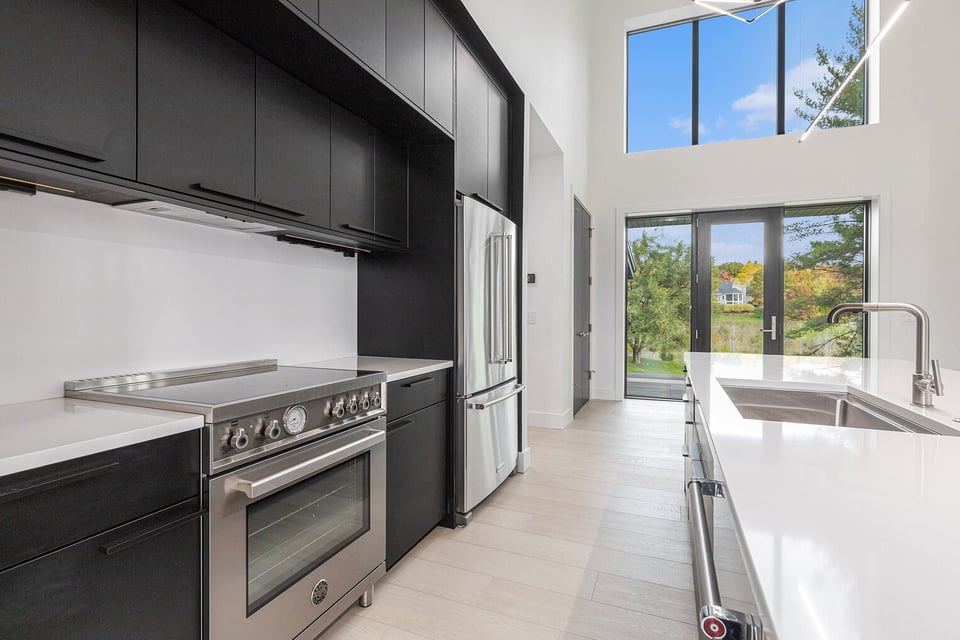
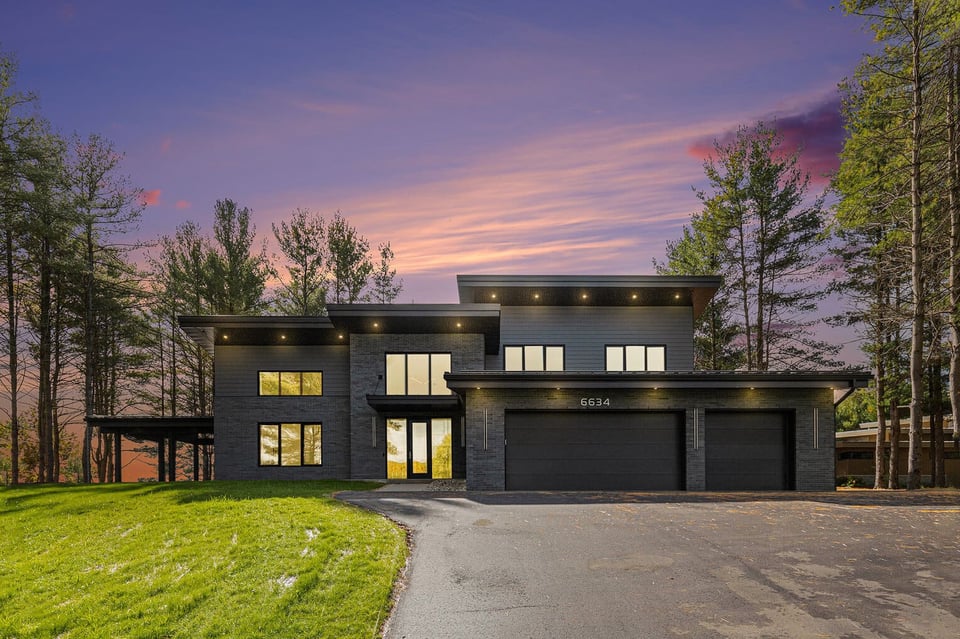
Absolutely. Most concrete homes look no different than any other custom luxury home. The wall system is largely hidden behind drywall, finishes, cabinetry, trim, flooring, and design details. Concrete construction affects performance far more than aesthetics.
See our gallery for some excellent examples of interior design in ICF homes.
Concrete & ICF Home Builder in West Michigan
R-Value Homes designs and builds high-performance custom homes throughout West Michigan with a focus on comfort, durability, health, resilience, and long-term efficiency. Our team specializes in advanced wall systems, thoughtful building science, and detail-oriented construction for homeowners who care deeply about how their home performs, on move-in day and years beyond.
Reach out here to begin the conversation.


.jpg?width=352&name=ICF%20Construction%20in%20Michigan%20Everything%20You%20Need%20to%20Know%20(2026).jpg)