6 Min Read
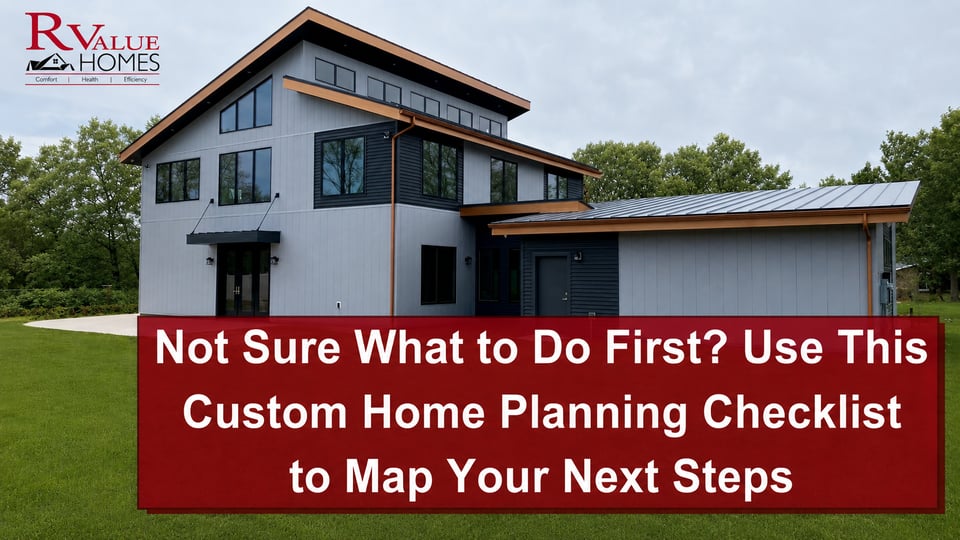
Building a custom home is exciting, but the beginning can feel surprisingly unclear. When you are still figuring out how to prepare to build a custom home, it can be hard to know if you should start with a lender, land, a builder, a timeline, or design ideas.
R-Value Homes has seen how often early planners feel stuck in that exact spot. It’s not because they are unprepared, but because so many of the first decisions are connected. That is why we created a Custom Home Planning Checklist: to help you organize your thoughts, understand which conversations matter early, and start planning a custom home in Grand Rapids or West Michigan with more confidence.
In this article, we’ll explain how the checklist helps reduce overwhelm, organize the next steps, and make early planning feel more manageable.
Table of Contents
- Why So Many People Feel Stuck Before Building a Custom Home
- What the Checklist Helps You Think Through
- Ask the Right Questions While Planning to Build a Custom Home
- How the Checklist Helps You Organize the Right Conversations Before Designing a Custom Home
- Why These Decisions Matter Early
- How to Use the Checklist Before You Are Ready for Detailed Planning
- FAQs about What to Do Before Building a Custom Home
- Ready to Make the Process Feel More Manageable?
Why So Many People Feel Stuck Before Building a Custom Home
It would be nice if the custom home design and building process were perfectly linear: finish step one, move to step two, then step three. But in real life, planning a custom home in Grand Rapids does not always work that way.
You may be thinking about land while also talking with a lender. Maybe you are comparing builders before you have a final budget. You may be wondering about design before you know exactly where the home will sit. You may be trying to understand the timeline before the home is even designed.
That overlap can make people hesitate.
They worry they are asking questions too early or too late. Or they worry they need to know their exact square footage, finishes, or move-in date before reaching out to a custom home builder in Grand Rapids.
Some people are also afraid to reach out too early and “waste a builder’s time,” especially if they are not even sure they can afford to build. They may still be comparing building new with buying a home that is pretty good, or buying something they can renovate over time.
You do not need it all figured out before starting. In fact, an early builder conversation is often the right next step because it can help you understand what is realistic, what still needs research, and which decisions should come first.
R-Value Homes believes the early planning stage is where a better building experience begins. The right guidance can help you organize the big decisions, understand what matters now, see what can happen next, and know where a builder can help guide the process.
What the Checklist Helps You Think Through
The Custom Home Planning Checklist gives you a simple structure for the early planning stage before building a custom home.
Instead of trying to hold every question in your head at once, it helps you think through five major areas:
- Budget targets
- Land
- Builder fit
- Timeline
- Design readiness
These are the conversations that shape what comes later, and they are more connected than most people realize.
Thinking through them together helps you avoid planning in a vacuum. Your budget may influence the land you choose. Your land may influence the design. Your builder may help you understand what is realistic before drawings get too detailed. Your timeline may affect when you need to begin design, make selections, secure financing, and obtain permits.
That is the value of the checklist: it helps you see the whole picture earlier, without requiring you to have every answer right away.
Instead of asking, “What do I do first?”, you can start asking better questions:
- What do we already know?
- What decisions are connected?
- Which conversations should happen next?
- Where do we need guidance before moving forward?
The goal is to organize the steps before building a custom home in a way that is complete, but also flexible.
Ask the Right Questions While Planning to Build a Custom Home
The checklist doesn’t have the answers, but it helps you find the right questions to ask before building a custom home.
|
Instead of wondering… |
The checklist helps you ask… |
|
“Do we need land before we call a builder?” |
“What do we know about the land, and what should a builder help us evaluate?” |
|
“Can we start designing before we know our exact budget?” |
“What budget comfort range should guide our early planning conversations?” |
|
“Are we too early to reach out?” |
“Which questions would be easier to answer with a builder’s guidance?” |
|
“What if we choose the wrong first step?” |
“Which decisions are connected, and what can happen at the same time?” |
|
“How do we know when we’re ready for design?” |
“What needs to be clear enough before the design process begins?” |
Instead of trying to solve everything at once, you can begin sorting your questions into the right categories: budget, land, builder fit, timeline, and design readiness.
By turning general uncertainty into specific questions, the checklist makes the early stage feel less like a guessing game and more like a plan.
How the Checklist Helps You Organize the Right Conversations Before Designing a Custom Home
Early custom home planning usually involves several conversations:
- Lender
- Land or real estate
- Builder
- Timeline
- Design
The challenge is knowing which conversations to have and when.
The checklist helps you organize those conversations in a more useful order.
For example, a lender can clarify your budget comfort range, and R-Value’s Custom Home Pricing Guide gives you a starting point for comparing that range to the type of home you want to build. From there, your builder can look at the bigger picture: if budget, land, goals, and timeline are aligned.
A real estate agent may help you find land, but your builder brings a different lens to the property itself, including slope, clearing, utilities, zoning, driveway location, topography, and how those details may affect the project.
Using the checklist early can help you walk into those conversations with better questions, clearer priorities, and a stronger sense of what you still need to learn.
Why These Decisions Matter Early
Before building a custom home, many people want to jump straight to the exciting parts: layout, views, kitchen ideas, outdoor living, windows, finishes, and all the features that will make the home personal.
But the best custom home design process is built on a clear foundation.
When budget, land, builder fit, timeline, and design readiness are considered early, you are less likely to go too far down a path that will need to be reworked later. You can have more realistic conversations about what is possible, what needs more research, and what should be decided before design gets too detailed.
The checklist helps you do that without turning early planning into a full design meeting before you are ready.
How to Use the Checklist Before You Are Ready for Detailed Planning
You should use the checklist as it suits you best, but here is our recommendation:
- Mark what you already know
- Circle what you are unsure about
- Make notes about questions you want to ask
- Identify which conversations should happen next
- Bring it into a call with your lender, builder, or spouse
You might discover that your next step is talking with a lender. Or evaluating land. Or learning more about builder fit. Or asking how long the design process may take. Or starting with R-Value’s Start Here page before moving into more detailed planning.
That is exactly what the checklist is for.
It gives you a practical way to move from “We have no idea where to start” to “Here is the next right step.”
FAQs about What to Do Before Building a Custom Home
What should I do first when planning to build a custom home?
Start by getting organized around the big early decisions: budget, land, builder fit, timeline, and design readiness. These pieces are connected, so the first step is not always a single task. A planning checklist can help you see what you already know, what still needs attention, and which conversation should happen next.
How does a custom home planning checklist help?
A custom home planning checklist helps reduce overwhelm by turning broad uncertainty into specific questions. Instead of trying to figure out everything at once, you can organize your thoughts around budget, land, builder selection, timeline, and design. It gives you a flexible starting point before you are ready for detailed planning conversations.
How do I choose the right West Michigan custom home builder?
Start by clarifying what matters most to you in the relationship, such as integrity, communication, attention to detail, experience, process, and builder fit. Then review each builder’s website, photo galleries, testimonials, reviews, social channels, certifications, memberships, and examples of completed work. For a custom home, it is often more helpful to choose a builder you trust before design begins than to collect bids for a home that has not been fully designed.
Do I need land before I talk to a custom home builder?
Not always. Talking with a builder before purchasing land can be helpful because the property may affect design, cost, driveway location, clearing, utilities, zoning, drainage, and timeline. A builder can help you look at potential land with a more practical understanding of what may be required to build there.
What should I prepare before a custom home builder planning call?
Bring what you know so far: your general budget comfort range, whether you own land or are still looking, where you hope to build, your rough timeline, must-have features, and any questions or concerns. You do not need finished plans before reaching out. The planning call should help clarify your next step.
Should I choose a builder before designing my custom home?
For a custom home, it is often helpful to choose your builder before design begins. A builder can help guide budget, site considerations, specifications, constructability, timeline, and pricing expectations as the design develops. This is especially important if you care about energy efficiency, comfort, durability, healthy indoor air, ICF construction, or other high-performance features.
Ready to Make the Process Feel More Manageable?
Planning a custom home is a big decision, but it does not have to feel like a guessing game. With the right questions, the right order of conversations, and the right builder involved early, you can move forward with more clarity and less overwhelm.
R-Value Homes believes a better building experience starts long before construction. It starts with careful planning, honest conversations, clear expectations, and a process that helps you understand what comes next.
If you are not sure what to do first, start with the checklist. Use it to organize your thoughts, identify your next questions, and see where you are in the process.
And when you are ready for guidance, R-Value Homes is here to help you take the next step with confidence. Contact us today.