
8 Min Read
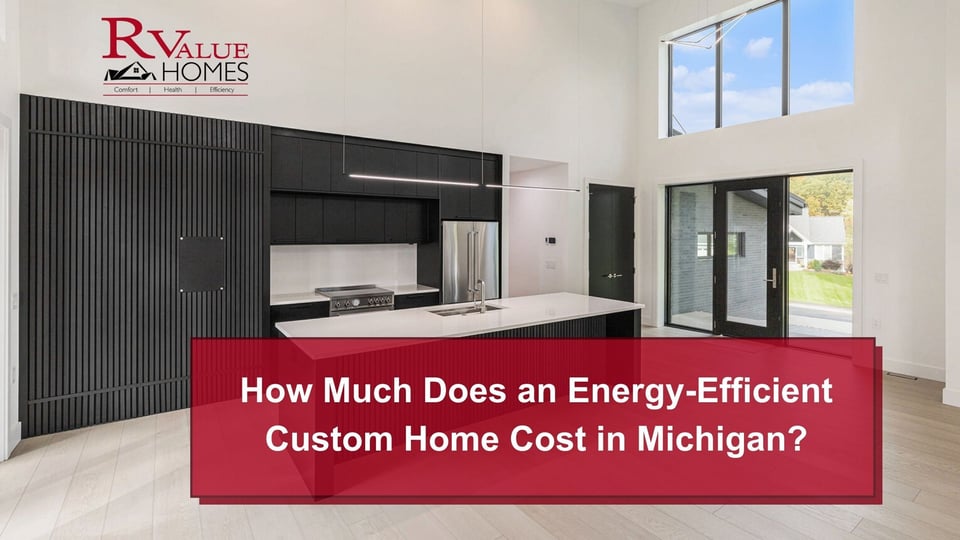
If you’re exploring the idea of building an energy-efficient custom home in Michigan, chances are you’ve already asked the question nearly every homeowner asks first: “So… how much does it cost?”
It’s a fair question. But when we talk about the cost of a high-performance home, one that is energy-efficient, healthy, durable, comfortable, and built to last generations, the conversation becomes much more meaningful than a simple dollar figure. Because cost isn’t just what you pay to build a home; it’s what you pay over the life of that home. If you're still in the early planning stages, our Custom Home Planning Checklist can help you organize your priorities, budget, and timeline before you begin designing.
Optimizing a new home for energy-efficiency results in extremely low operating costs, healthier indoor air, and exceptional comfort. But it also requires a home that was designed and engineered differently from the start, with deliberate choices that affect not only performance, but also budget, especially if you’re still weighing building new versus buying an existing home.
So instead of vague cost ranges or overly simplified “price per square foot” answers, R-Value Homes of West Michigan is here to walk you through:
-
What an energy-efficient custom home really costs in Michigan
-
Why these homes cost what they do
-
The technical systems that drive both upfront investment and long-term savings
-
How our design/build process eliminates surprises and delivers predictable, high-performance results
Table of Contents
- What Does an Energy-Efficient Custom Home Cost in Michigan?
- Why High-Performance Homes Aren’t Priced Like “Code-Built” Homes
- Custom Home Features You Receive for That Investment
- Why “Price Per Square Foot” Doesn’t Work for High-Performance Homes
- Breaking Down the Cost Drivers of an Energy-Efficient Home in Michigan
- What Homeowners Typically Save: Real-World Utility and Comfort Outcomes
- What About Net-Zero? Understanding the Cost Difference in Michigan
- Frequently Asked Questions About Energy-Efficient Custom Homes in Michigan
- High-Performance Custom Homes Across West Michigan
What Does an Energy-Efficient Custom Home Cost in Michigan?
When people begin researching high-performance homes, they often expect a single number, something like, “Energy-efficient homes cost X% more than standard homes.” But in reality, the range depends on your goals, your design, and your site. Still, we can provide a transparent, grounded estimate based on two decades of building some of Michigan’s most efficient and durable custom homes.
Across Greater Grand Rapids, we regularly see builders pricing anywhere from $250 to $950 per square foot, with even higher figures in places like Traverse City. Naturally, the quality and performance of those homes varies just as widely. At R-Value Homes, we consistently deliver exceptional results in the $350 to $500 per square foot range, where high performance meets lasting value
The Short Answer: Typical Cost Range in Michigan
A true energy-efficient custom home built to the performance standards we hold ourselves to typically costs:
$600,000 to $2,000,000
This range includes design/build projects throughout West Michigan, incorporating the features many homeowners choose when they prioritize long-term comfort, durability, and efficiency.
Before settling on a target investment, it’s helpful to understand how to set a realistic budget for a custom home in West Michigan based on your priorities, site, design, and performance goals.
Our West Michigan custom home building pricing guide breaks it down in a straightforward way.
Why High-Performance Homes Aren’t Priced Like “Code-Built” Homes
Many Michigan builders start with a standard plan and try to “upgrade” it to be more energy-efficient. At R-Value Homes, we do the opposite: we start with performance.
Every home begins with:
-
A deliberately engineered building envelope
-
Verified airtightness targets
-
Proper HVAC design
-
Moisture and ventilation strategy
-
Material choices that support longevity, air quality, and resilience
These are foundational features, and they’re the reason our homes routinely outperform typical new builds. So when homeowners ask why our homes cost more upfront than code-minimum homes, we explain:
-
Code sets the floor, not the goal.
-
Energy-efficient homes require a more intentional approach to designing the entire home as one system.
-
High-performance materials and systems are part of the structure, not add-ons.
-
Third-party verification adds rigor, not just cost.
And most importantly…
-
A high-performance home costs less to live in, month after month, year after year.
Custom Home Features You Receive for That Investment
Your energy-efficient custom home budget covers far more than insulation upgrades or fancy mechanical systems. It includes:
-
ICF construction for superior insulation, strength, and quietness
-
Triple-pane windows appropriate for Michigan’s climate
-
Airtight construction proven by blower-door tests
-
ERV-based ventilation and HEPA filtration
-
All-electric heat pump systems designed to run efficiently in winter
-
Moisture management built into the structure
-
Solar-ready planning
-
Durability-focused design that reduces long-term maintenance costs
-
A fixed-price construction proposal based on complete drawings and specifications
Some of these features don’t appear on typical builder spec sheets because they’re not required. For us, they’re the baseline.
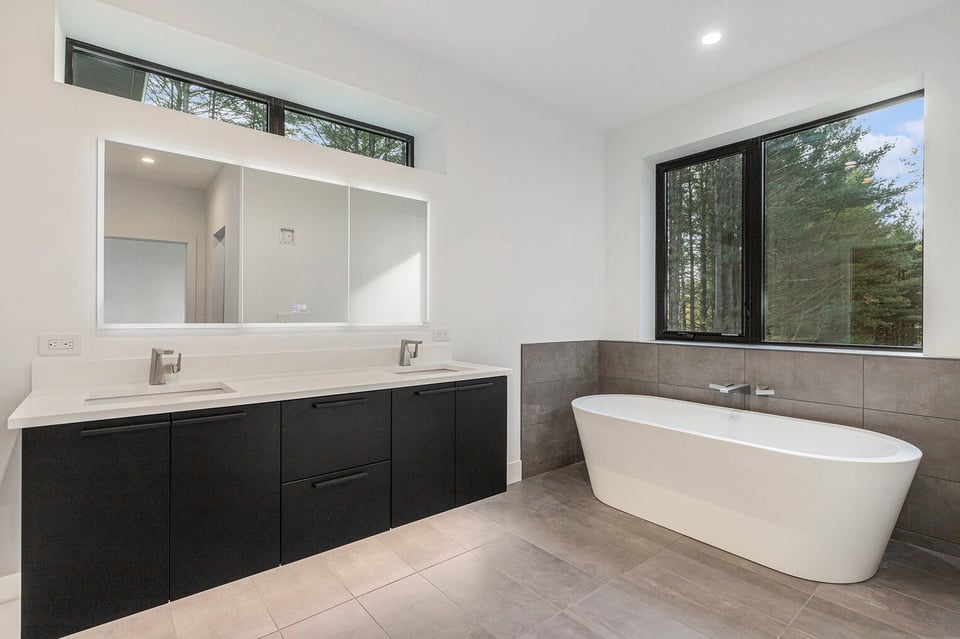 Why “Price Per Square Foot” Doesn’t Work for High-Performance Homes
Square footage is one of the least accurate ways to estimate the cost of an energy-efficient home. Why?
Because the systems that influence performance, ICF walls, ERVs, triple-pane windows, airtight detailing, don’t scale linearly with square footage.
A smaller home with high-end systems might cost more per square foot than a larger home with reduced performance goals.
That’s why our custom home building process begins with a preliminary design & budget alignment meeting, where we balance size, features, and performance from the start, rather than adjusting late in the process (which almost always costs more).
Breaking Down the Cost Drivers of an Energy-Efficient Home in Michigan
Energy-efficient homes require dozens of systems designed to work together. Each choice affects the next one, and that’s what makes the difference between a “better-than-code” house and a truly high-performance home. Below is a transparent look at the major cost drivers. This is the part most builders gloss over, but it’s also where homeowners discover what they’re actually paying for, and why it matters.
The Building Envelope: Your Home’s Most Important System
Most of your long-term energy savings come from decisions made before a furnace or heat pump ever turns on. That starts with the envelope.
Insulated Concrete Forms (ICF)
We build every home with ICF because nothing else delivers the same blend of:
-
Continuous insulation
-
Extreme airtightness
-
Remarkable structural strength
-
Sound reduction
-
Moisture resistance
-
Energy savings for decades
ICF adds a modest upfront premium, but it reduces mechanical loads, shrinks HVAC equipment sizes, and eliminates many of the common durability issues found in wood-framed homes, which is why many homeowners spend time understanding how ICF construction really stacks up against traditional framing before deciding which path makes the most sense.
ICF also supports generational longevity, a core R-Value principle: we build homes “to last not just your lifetime, but many lifetimes.”
Triple-Pane Windows
Most Michigan homes lose tremendous amounts of heat through windows. Triple-pane glazing drastically improves:
-
Surface temperatures
-
Comfort near the glass
-
Condensation resistance
-
Sound control
Airtight Construction (Verified)
Airtightness is one of the biggest predictors of energy performance, and comfort. We don’t just aim for good airtightness; we verify it on every home through third-party blower door testing. Our homes routinely land in the top ~2% in the region for airtightness and energy performance.
It’s why we confidently offer the “Airtight & Ventilated Right Guarantee.”
Mechanical Systems: Engineered, Not Estimated
Once the envelope is dialed in, the mechanical system can be sized with precision.
Cold-Climate Heat Pumps
High-performance homes require heat pumps designed for Michigan winters. But the real magic is in the design behind them:
-
Manual J: Accurate load calculation
-
Manual S: Equipment selection
-
Manual T: Air distribution
-
Manual D: Duct sizing
Proper HVAC design is foundational to comfort and performance and must be integrated early in design. Because our envelopes are so tight and well-insulated, loads are dramatically lower, meaning:
-
Smaller equipment
-
Quieter operation
-
Lower monthly energy costs
ERV Ventilation + HEPA Filtration
Airtight homes must have dedicated ventilation. We specify ERVs with HEPA filtration to ensure:
-
Constant fresh air
-
Filtered, clean indoor air
-
Balanced humidity
-
Reduced allergens and pollutants
All-Electric, Solar-Ready Systems
Michigan is a strong candidate for electrified homes. Because your heating load is low, going all-electric becomes cost-effective and future-proof. Solar-ready planning involves:
-
Electrical panel sizing
-
Chase pathways
-
Roof structure considerations
-
Conduit rough-ins
Indoor Air Quality, and Durability
Home performance is equally about energy and long-term health.
Moisture Control & Durability Planning
High-performance means:
-
Mold-resistant assemblies
-
Proper vapor control
-
Well-planned drainage planes
-
Materials chosen for longevity, not trend
Acoustic Comfort
ICF + triple-pane windows create some of the quietest homes possible. While this isn’t always a primary motivation, clients often comment that the quietness is one of the most unexpected and appreciated benefits.
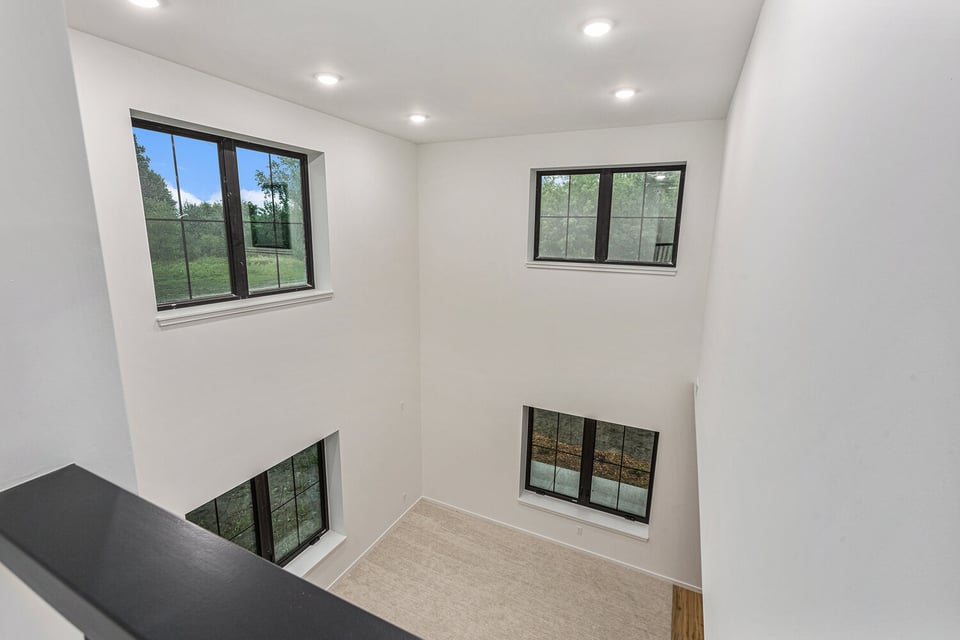
What Homeowners Typically Save: Real-World Utility and Comfort Outcomes
The question homeowners often ask after understanding cost is: “But what will I save?” Thanks to our reliance on third-party verification, these aren’t marketing claims; they're measurable outcomes.
The Impact of a HERS 34 Home in Michigan
The HERS Index is a bit like the energy industry’s version of a miles-per-gallon rating. Lower scores indicate better efficiency. A typical new home scores around 100. A HERS 34 is exceptionally efficient, 66% better than a standard new home.
As just one example, a recent ZERH-certified project hit a pre-solar HERS 34 score, demonstrating:
-
Extremely low heating/cooling demand
-
Proper load calculations
-
Balanced ventilation
-
An envelope performing as engineered
Utility Bill Expectations
While every household’s usage is different, your client testimonials paint a vivid picture. One homeowner reported:
“I simply cannot believe I pay less for my monthly heating (and air conditioning) than most folks do in a 1000 sq. ft. home built ‘construction grade’… My family calls this house our fortress of solitude.”
—Cliff R.
This is not an anomaly. With:
-
ICF
-
triple-pane windows
-
airtight construction
-
cold-climate heat pumps
-
ERVs
-
all-electric design
…your homes often deliver heating bills lower than many apartments or starter homes.
Long-Term Maintenance Savings
Energy savings are only half the story. Most homeowners only consider first cost, not life cycle cost. But when a home is designed for multiple generations, those compounding savings matter.
-
ICF eliminates concerns about rot and many moisture-related failures.
-
Right-sized HVAC equipment runs longer and gentler, extending lifespan.
-
Balanced ventilation reduces dust, allergens, and humidity swings.
-
Durable materials mean fewer replacements over time.
What About Net-Zero? Understanding the Cost Difference in Michigan
The phrase “Net Zero” often intimidates homeowners. It sounds expensive, futuristic, or complicated. But the truth is Net Zero is often just one small step beyond the performance level we're already designing toward.
What Net Zero Typically Requires
The biggest cost difference is typically the solar array, not the home itself. In Michigan, a Net Zero home usually adds:
-
A solar photovoltaic array
-
Battery-ready or battery-included electrical system
-
Slightly increased envelope or mechanical performance (depending on design)
Why Our Homes Are Already Net-Zero Ready by Design
Because ICF envelopes perform so well, and because our heating loads are so low, homes require much smaller solar arrays than most people expect.
A poorly performing home might need 12–20 kW of solar to offset energy use.
A high-performance ICF home with a HERS score in the 30s may only need:
-
6–10 kW for many clients
-
Sometimes even less, depending on lifestyle
Still deciding between budget limits and performance needs? Try our Start Here Quiz to compare your ideas against the right benchmarks.
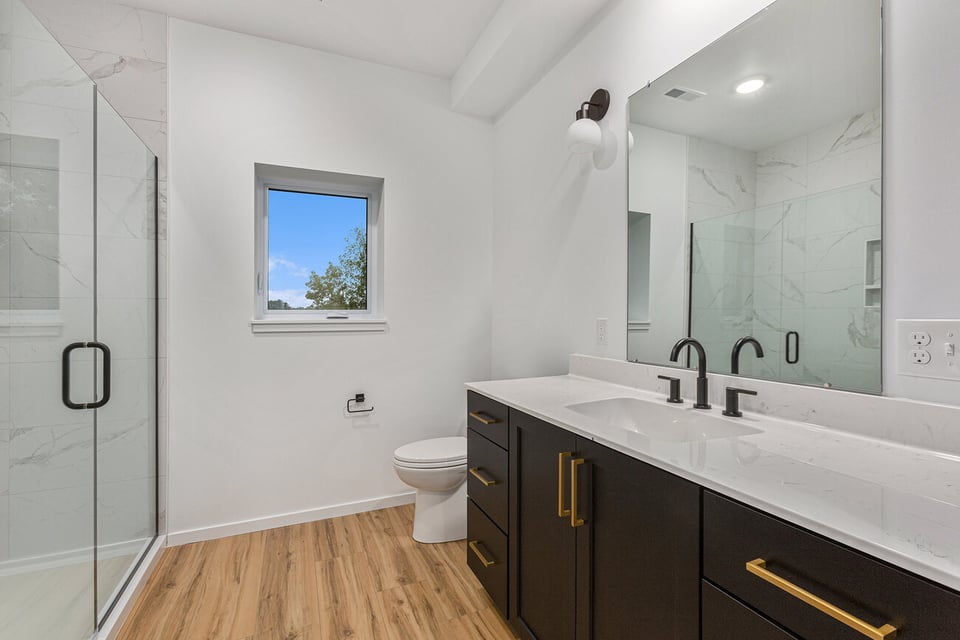 Frequently Asked Questions About Energy-Efficient Custom Homes in Michigan
These are the questions we hear most often from homeowners researching energy-efficient or high-performance homes. Clear answers help you make informed decisions, and they highlight why the process and details matter so much.
Is building an energy-efficient home more expensive?
There is an initial premium. But that cost difference is typically small compared to the long-term financial performance of a well-built, airtight, all-electric, properly ventilated home.
For example, a pre-solar HERS 34 home consumes dramatically less energy than the average new home and often costs less to heat than many older 1,000 sq. ft. houses, as real clients have reported.
In other words, you pay more up front to pay far less for decades.
Can I build a healthy home without going fully Net Zero?
Absolutely. “Healthy home” features such as these can be incorporated into any high-performance home without requiring a full Net Zero package. Many of our clients choose Indoor AirPLUS–level health performance regardless of their energy goals. These features include:
-
ERV ventilation
-
HEPA filtration
-
Low-VOC finishes
-
Mold-resistant assemblies
Does building with ICF increase cost?
ICF adds a modest premium to the wall system, but it reduces costs elsewhere, notably HVAC system size, maintenance, and long-term energy use. It also dramatically improves comfort and noise reduction.
Most importantly, ICF homes last longer and require far fewer repairs over time.
How much does solar add to the project cost?
It depends on your energy goals, but because your envelopes are already high-performance, solar arrays are typically much smaller than clients expect.
How long does the design and build process take?
Your timing depends on site preparation, design complexity, and permitting, but the preconstruction process is intentionally thorough because it reduces surprises later.
We start building only after specifications, selections, and pricing are complete. This is one reason our homes meet such consistent performance targets, along with the timelines we promise during our collaboration.
Can simplifying the architectural design lower cost?
Yes. Shape complexity, rooflines, and large glazing areas influence cost more than many homeowners expect. High performance can be achieved at many budget levels when architecture and energy goals are aligned early.
Who Is a Good Fit for a High-Performance Custom Home?
A high-performance home is ideal for homeowners who:
-
Value health and comfort: Cleaner air, better humidity control, and consistent temperatures.
-
Think long-term: Prioritizing durability, low maintenance, and predictable energy costs.
-
Care about efficiency and sustainability: Whether for environmental reasons or utility savings.
-
Appreciate a thoughtful, collaborative design process: Where details matter and performance is the goal.
High-Performance Custom Homes Across West Michigan
If you’re ready to explore what it takes to build a healthier, more comfortable, truly energy-efficient new home in Michigan, we’d love to talk. Let’s build something that enhances your life for generations. We are ready when you are.
R-Value Homes proudly serves West Michigan, including:
Lowell, Ada, East Grand Rapids, Grand Rapids, Caledonia, Byron Center, Jenison, Hudsonville, Rockford, Grandville, Standale, Allendale, Zeeland, Holland, Fennville, Wayland, Middleville, and surrounding communities.

.png?width=352&name=Blog%20Headers%20(9).png)
-png-1.png?width=352&name=Blog%20Headers%20(3)-png-1.png)